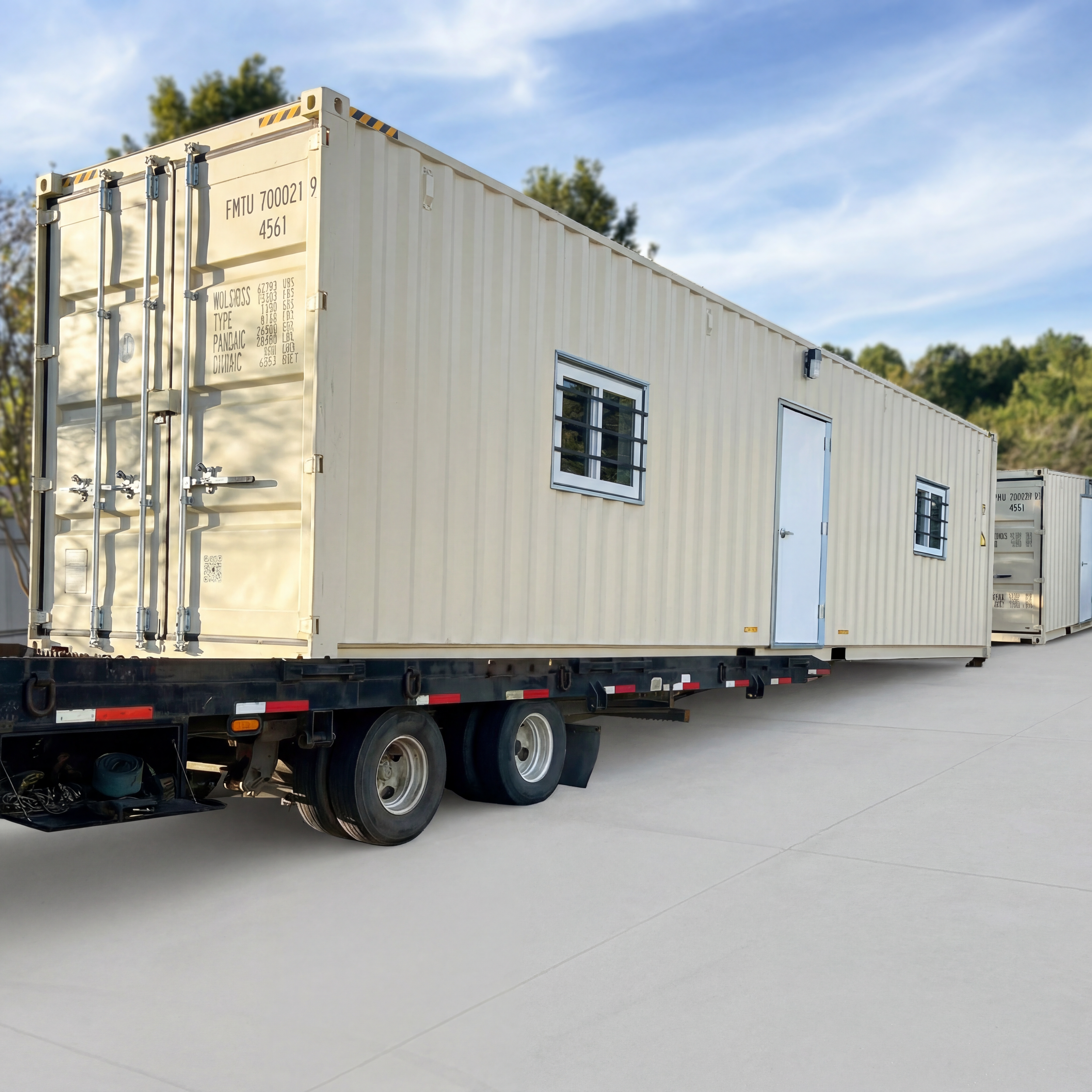
How Shipping Container Offices Are Delivered
One of the most common questions buyers have is how shipping container offices are delivered and placed on-site. While the process is straightforward, site conditions and access play a major role in how delivery is handled.
This guide explains how container office delivery works, what to expect, and what factors can affect delivery cost and logistics.
This article is part of our Container Conversion Resources library.
How Container Office Delivery Works
Shipping container offices are typically delivered as fully finished units. Once the container arrives, it is placed on the prepared site and is ready for setup.
The most common delivery methods include:
Tilt-bed trucks
Roll-off trucks
Crane-assisted placement
The delivery method used depends on site access, container size, and placement requirements.
Tilt-Bed Truck Delivery
Tilt-bed delivery is one of the most common and cost-effective options.
How it works:
The container is transported on a flatbed truck
The bed tilts and slides the container into place
Best suited for open, level sites with clear access
Tilt-bed delivery works well for:
Driveways
Open yards
Job sites with room to maneuver
Crane Delivery
Cranes are used when containers need to be placed in locations that are not accessible by tilt-bed trucks.
Common reasons for crane delivery:
Tight or restricted access
Placement behind buildings
Elevated placement
Precision positioning
Crane delivery adds cost but allows for placement in challenging locations.
Site Preparation Requirements
Before delivery, the site must be properly prepared.
Typical site preparation includes:
Level ground or pad
Gravel base, concrete pad, or footings
Clear access path for delivery equipment
Proper site preparation ensures safe placement and long-term stability of the container office.
How Delivery Affects Cost
Delivery costs vary depending on:
Distance to the site
Container size (20-foot vs 40-foot)
Delivery method
Site accessibility
Crane requirements
Delivery is often handled separately from the container conversion itself and should be considered as part of the overall project budget.
For a full breakdown of how pricing is affected by size, features, and logistics, see our guide on container conversion costs.
Can a Container Office Be Moved Later?
One advantage of container offices is that they can be relocated if needed.
Containers can be:
Picked up and moved to a new site
Repurposed for a different use
Resold or redeployed
Relocation costs depend on distance, access, and placement requirements, similar to the original delivery process.
Delivery Considerations Based on Use Case
Delivery needs can vary based on how the container office will be used.
Examples:
Backyard offices may require careful placement around landscaping
Jobsite offices often prioritize speed and ease of relocation
Business offices may require precise placement for customer access
Understanding how you plan to use the container helps determine the best delivery approach.
Delivery vs Traditional Construction
Compared to traditional construction, container office delivery offers:
Faster deployment
Fewer on-site trades
Less site disruption
Predictable timelines
This is one reason many buyers choose container offices over sheds or stick-built structures.
Preparing for Delivery Day
To ensure smooth delivery:
Confirm site access and clearance
Verify pad or foundation readiness
Coordinate delivery timing
Ensure utility hookups are planned
Proper planning minimizes delays and unexpected costs.
Explore Container Office Options
Once delivery logistics are understood, the next step is selecting the right container office configuration.