Mobile Offices & Containerized Offices
Purchase climate controlled portable office buildings engineered for commercial jobsites and mega projects. Transparent pricing on finished containerized offices, ready for nationwide delivery.
Built for Commercial Procurement
Our mobile offices and portable office buildings are containerized offices, not flimsy modular wood trailers. Every unit is spec'd for active construction and industrial operations across the Gulf South.
Vault Like Security
Corten steel containerized offices with deadbolts and window security bars. A secure alternative to breakable modular wood jobsite trailers.
Closed Cell Spray Foam
Seamless closed cell spray foam insulation creates a 100% thermal barrier for extreme Southern heat. No fiberglass, no container rain, no rot.
Commercial Grade PVC
Moisture resistant commercial grade PVC paneling throughout. Professional finish that survives dirty jobsites and pressure washing.
Turn Key Inventory
Browse mobile offices, containerized offices, and portable office buildings with transparent pricing. Select a unit for full specs and purchase request.
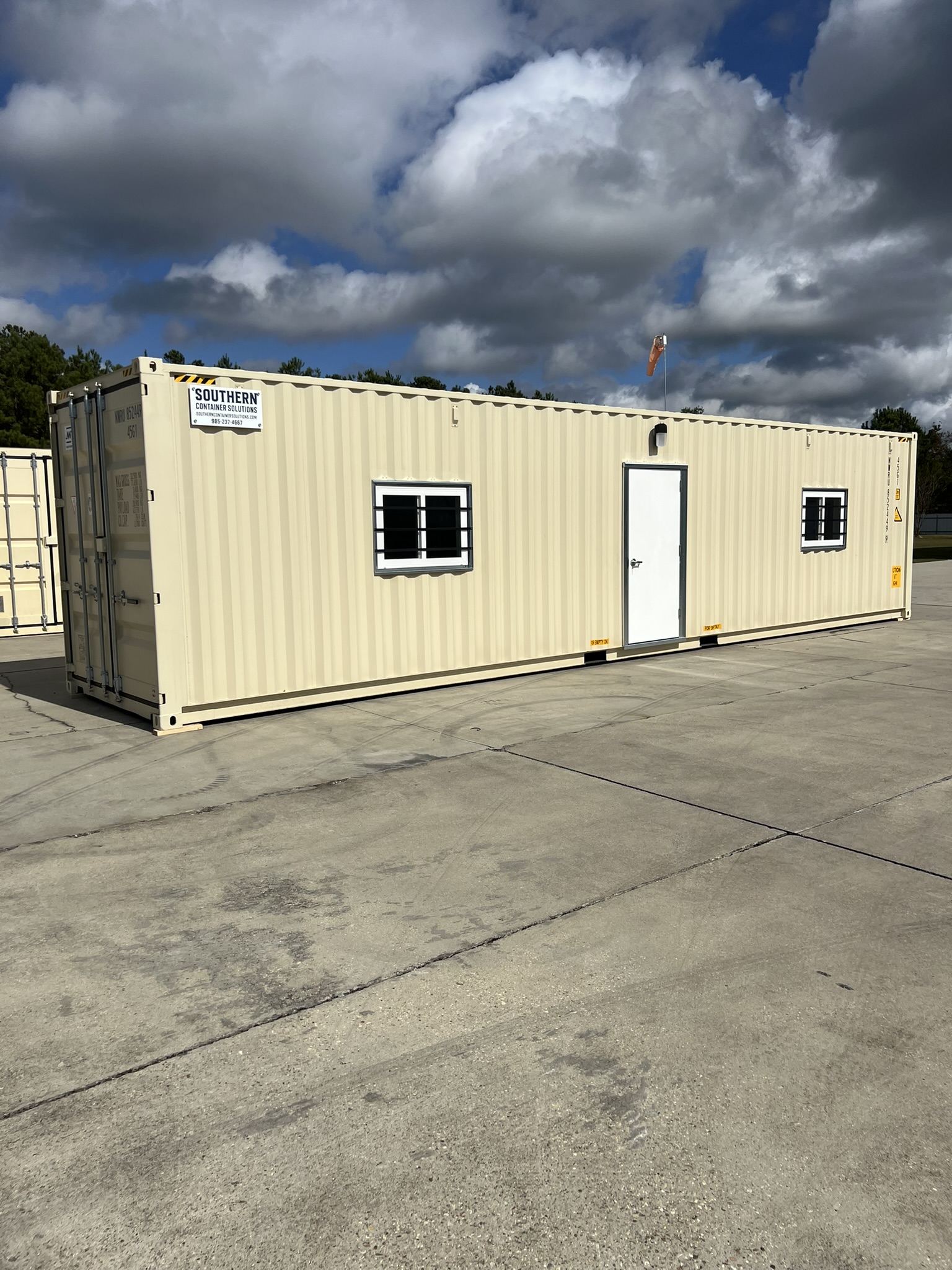
40' Office Container
Fully finished, climate-controlled one-trip office container — ideal for job sites, commercial operations, and growing businesses that need a professional workspace fast.
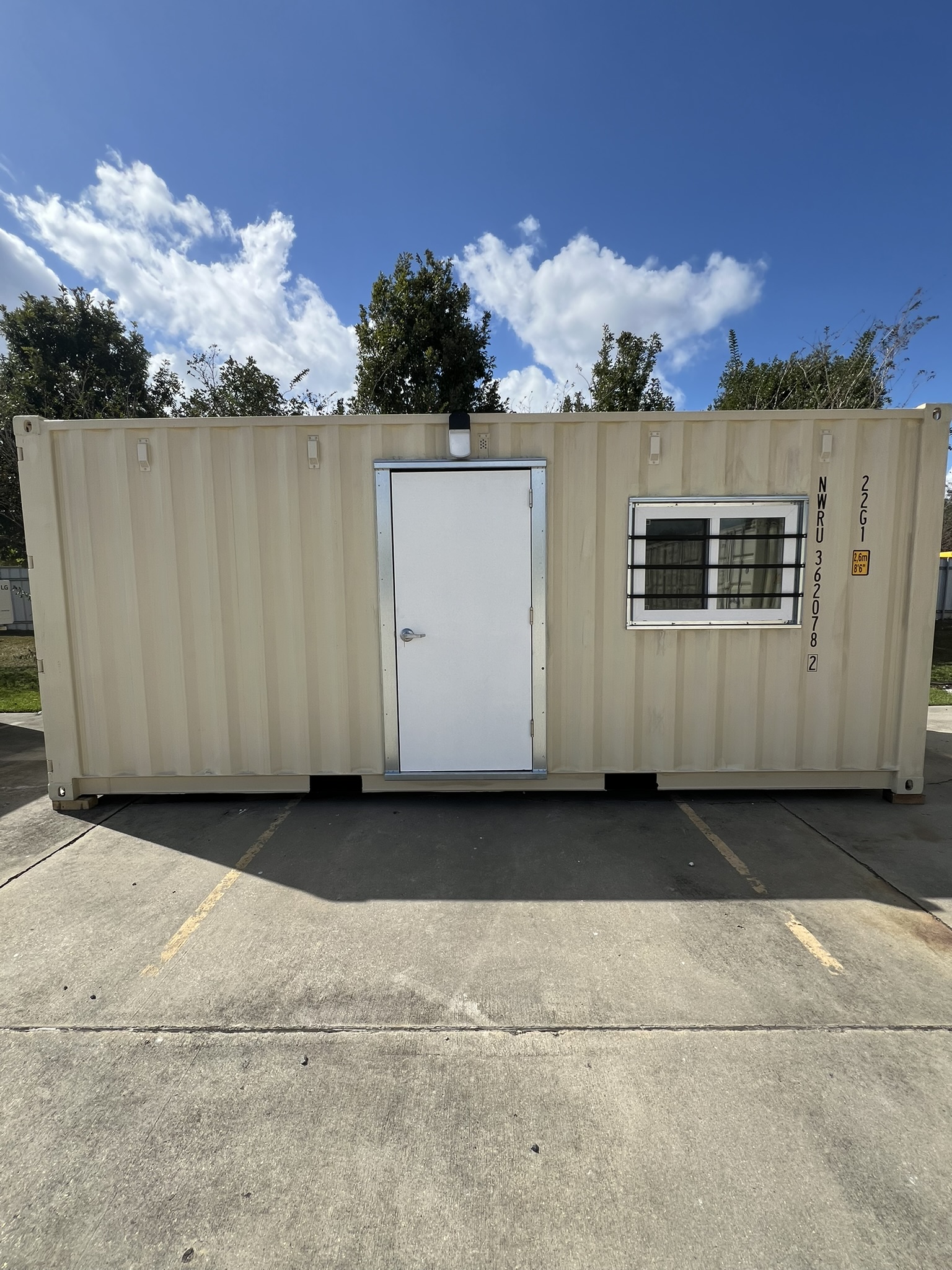
20' Office Container
Compact, climate-controlled one-trip office container — ideal for jobsites, remote offices, and temporary workspaces when space and budget matter.
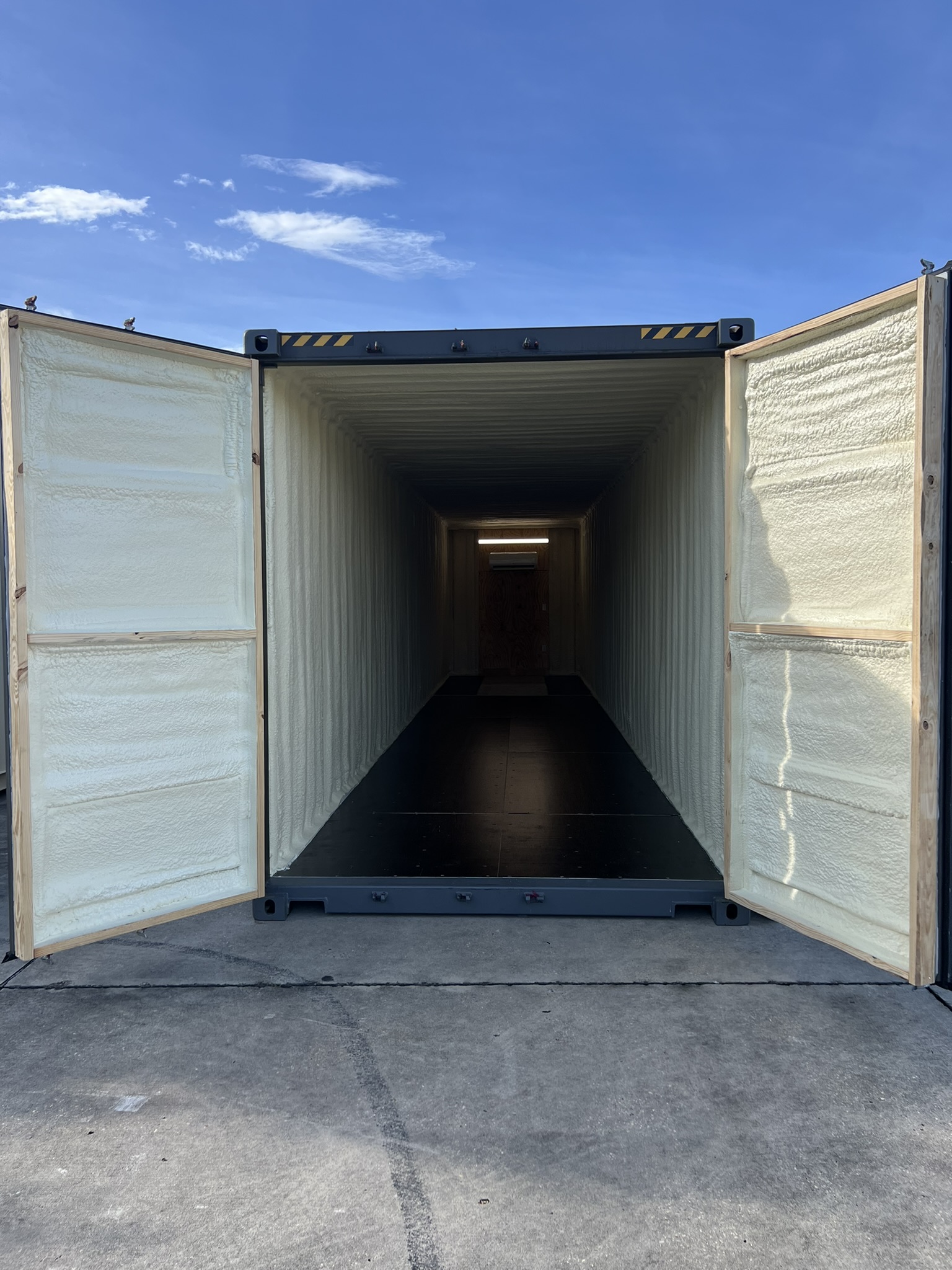
40' Climate Controlled Storage Container
This 40 foot climate controlled shipping container provides a massive, secure, and temperature stable environment for sensitive storage or operational needs. Fully insulated with 2 inch spray foam throughout, it is built to lock out extreme temperatures and humidity. The unit comes equipped with a professional grade LG mini split system for reliable heating and cooling, alongside basic LED lighting and a dedicated electrical panel ready to be powered up and used immediately.
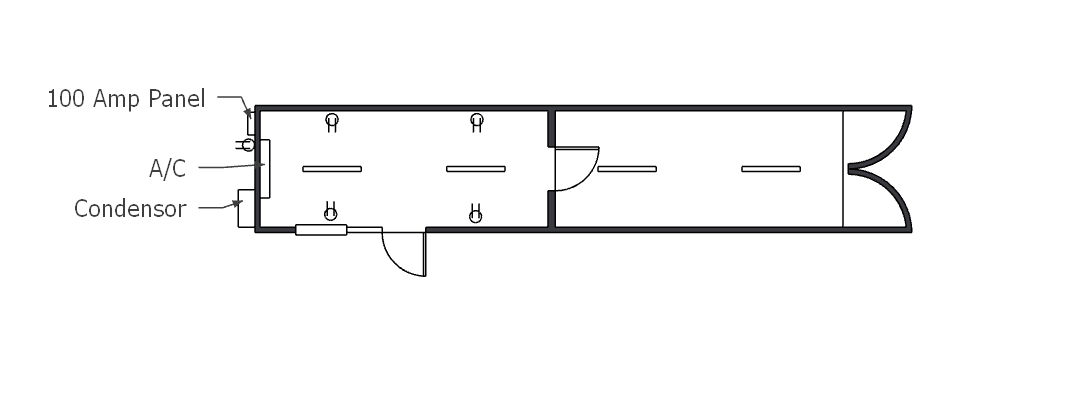
40' Office / Storage Combo
40' one-trip unit with a full 20' office build (same spec as our 20' office) plus a dedicated 20' storage bay — partition wall with interior man door, cargo lockbox, and storage lighting and power.