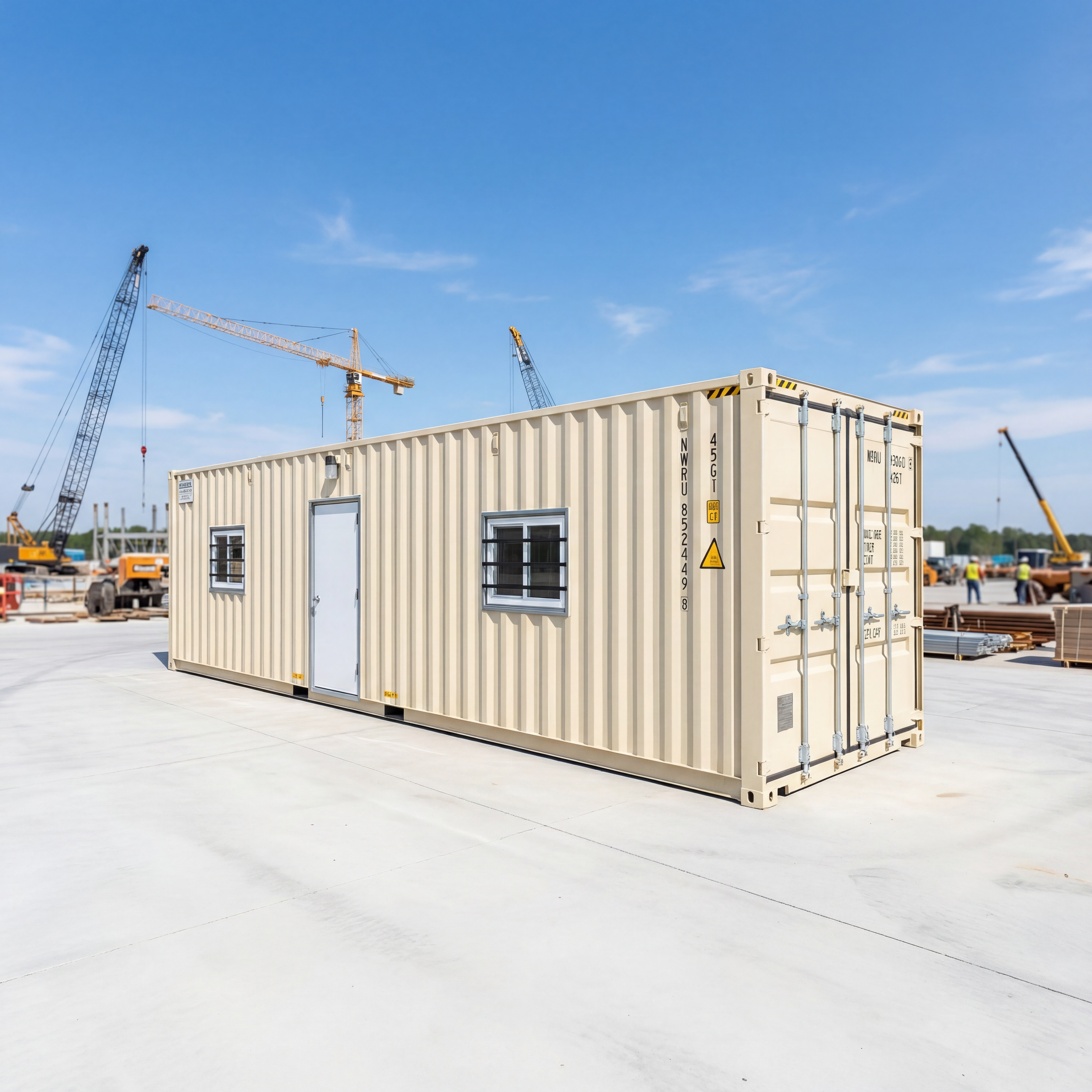
Shipping Container Office Uses
Shipping container offices are used in a wide range of residential, commercial, and industrial settings. Their durability, flexibility, and speed of deployment make them a practical alternative to traditional construction for many applications.
This guide is part of our Container Conversion Resources library and outlines the most common ways container offices are used.
Backyard Office
One of the most common uses for container offices is as a backyard office for remote work or home-based businesses.
Key benefits include:
Separation from the main house
Climate-controlled, insulated workspace
Faster setup than traditional additions
Relocatable if needs change
Many homeowners compare container offices to other backyard structures when deciding on a workspace solution.
Small Business Office
Container offices are widely used by small businesses that need functional office space without long construction timelines.
Common examples include:
Startup offices
Administrative offices
Service business headquarters
Sales or client meeting spaces
When budgeting for business use, understanding container conversion pricing is often the next step.
Jobsite Office
Container offices are widely used as jobsite offices for construction, industrial, and infrastructure projects.
Why they’re effective:
Built from structural steel
Secure and weather-resistant
Suitable for temporary or long-term job sites
Easy to transport and redeploy to new locations
Jobsite container offices are often used for:
Project management
Field supervision
Safety meetings
Document storage
Workshop or Studio Space
Container conversions are frequently used as workshops or creative studios.
Common applications include:
Art studios
Photography studios
Design or fabrication spaces
Maker workshops
Benefits:
Open layouts
High ceilings relative to footprint
Electrical capacity for tools or equipment
Customizable lighting and finishes
Professional Services Office
Some container offices are used for client-facing professional services, such as:
Consulting offices
Real estate offices
Field offices
Temporary customer service locations
When finished properly, container offices can present a clean, modern appearance suitable for meeting clients or customers.
Remote or Rural Office Locations
Container offices are often chosen for remote locations where traditional construction is impractical.
Use cases include:
Rural properties
Agricultural operations
Hunting land or recreational property
Remote business sites
Their ability to be delivered as a finished unit makes them ideal for areas without easy access to contractors.
Temporary or Expandable Office Space
Container offices work well for businesses that need temporary or scalable office space.
Examples:
Overflow office space
Seasonal operations
Temporary expansions
Pilot locations
Because containers can be relocated or resold, they offer flexibility that permanent buildings do not.
Are Container Offices Right for Every Use?
While container offices are versatile, they may not be ideal for every situation.
They may not be the best option if:
Permanent zoning restrictions apply
Large, multi-story space is required
Extensive plumbing or utilities are needed on day one
Understanding how you plan to use the space helps determine whether a container office is the right solution.
Choosing the Right Container Office for Your Use Case
Selecting the right container office depends on:
Intended use
Space requirements
Location and site conditions
Budget and timeline
To explore available configurations and layouts, you can review current container office options.
Learn More About Container Office Options
To explore available configurations:
View container office models
Compare sizes and layouts
Review pricing and customization options
A properly designed container office can serve as a durable, functional workspace for years.